The Best Fluffy Pancakes recipe you will fall in love with. Full of tips and tricks to help you make the best pancakes.

A refined, aromatic gourmet dish with effortless elegance
Duck breast is one of those ingredients that instantly elevates a meal from ordinary to unforgettable. Rich, tender, and deeply flavorful, it has long been a favorite in French-inspired cuisine and modern fine dining. When paired with a delicate lavender honey glaze, duck breast transforms into a dish that feels luxurious yet surprisingly approachable for the home cook.
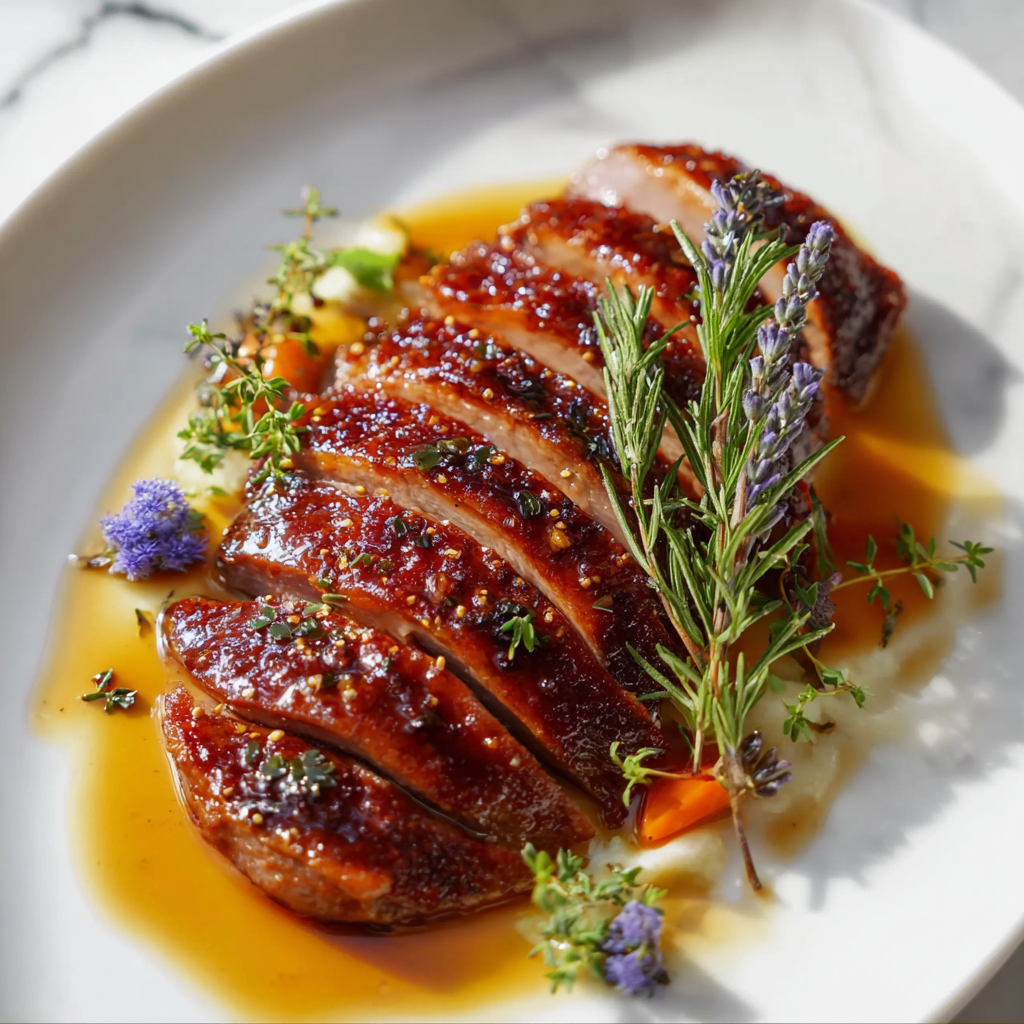
This Duck Breast with Lavender Honey Glaze recipe balances savory and sweet with floral complexity, creating a restaurant-quality entrée that can be prepared in under an hour. The crispy rendered skin, the juicy medium-rare meat, and the glossy glaze infused with honey and lavender come together in perfect harmony. Whether you’re planning a romantic dinner, an elegant holiday meal, or simply want to impress guests without overwhelming yourself, this dish delivers every time.
In this in-depth guide, you’ll learn not only how to cook duck breast perfectly but also why each step matters, how to control flavor intensity with lavender, and how to customize the recipe for different occasions. By the end, you’ll feel confident serving duck like a seasoned chef.
Why Duck Breast Deserves a Place on Your Table
Duck breast is often misunderstood as difficult or overly rich, but in reality, it is one of the most forgiving and rewarding proteins to cook. Unlike chicken breast, duck breast benefits from its layer of fat, which renders slowly to create crisp skin and moist meat.
Here’s why duck breast stands out:
- Naturally rich flavor without heavy seasoning
- Renders its own cooking fat
- Perfect canvas for sweet, acidic, and floral glazes
- Ideal for pan-searing with minimal equipment
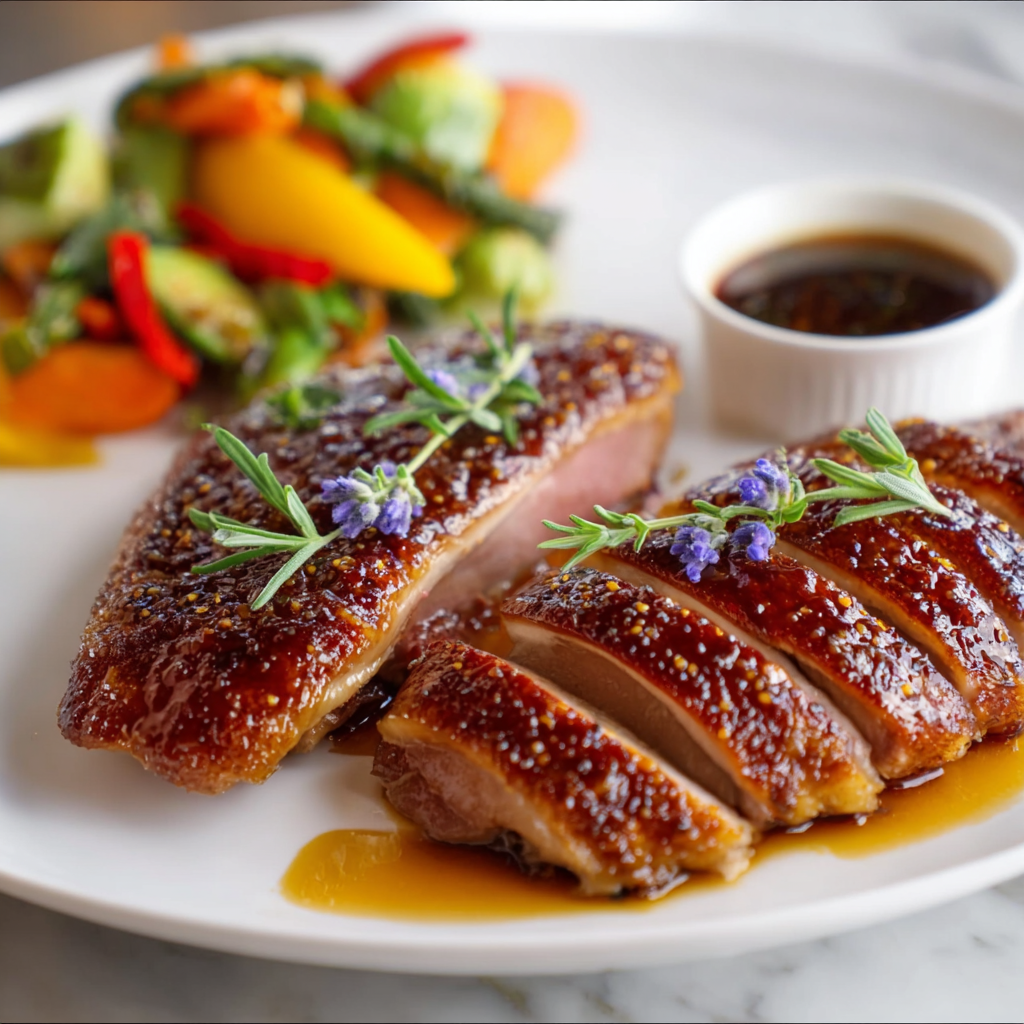
- Visually stunning when sliced and plated
When paired with honey and lavender, duck breast takes on a refined personality that feels luxurious but not overpowering.
The Magic of Lavender Honey Glaze
Lavender is often associated with desserts, teas, and perfumes, but in savory cooking it adds a subtle floral note that enhances rather than dominates. When used sparingly, culinary lavender complements rich meats beautifully.
Honey, on the other hand, brings warmth and natural sweetness that caramelizes quickly, forming a glossy glaze that clings to the duck.
Together, lavender and honey create:
- A gentle floral aroma
- Balanced sweetness without heaviness
- A sophisticated flavor profile reminiscent of Provençal cuisine
- A glaze that enhances rather than masks the duck’s richness
The key is moderation—lavender should whisper, not shout.
Ingredients
Duck Breast with Lavender Honey Glaze – Ingredients
- 2 duck breasts (skin-on)
- Salt, to taste
- Freshly ground black pepper, to taste
- 1 tablespoon unsalted butter
- 2 tablespoons honey
- ½ teaspoon dried culinary lavender
- 1 small garlic clove, minced
- 1 teaspoon apple cider vinegar
- Fresh thyme sprigs (optional, for garnish)
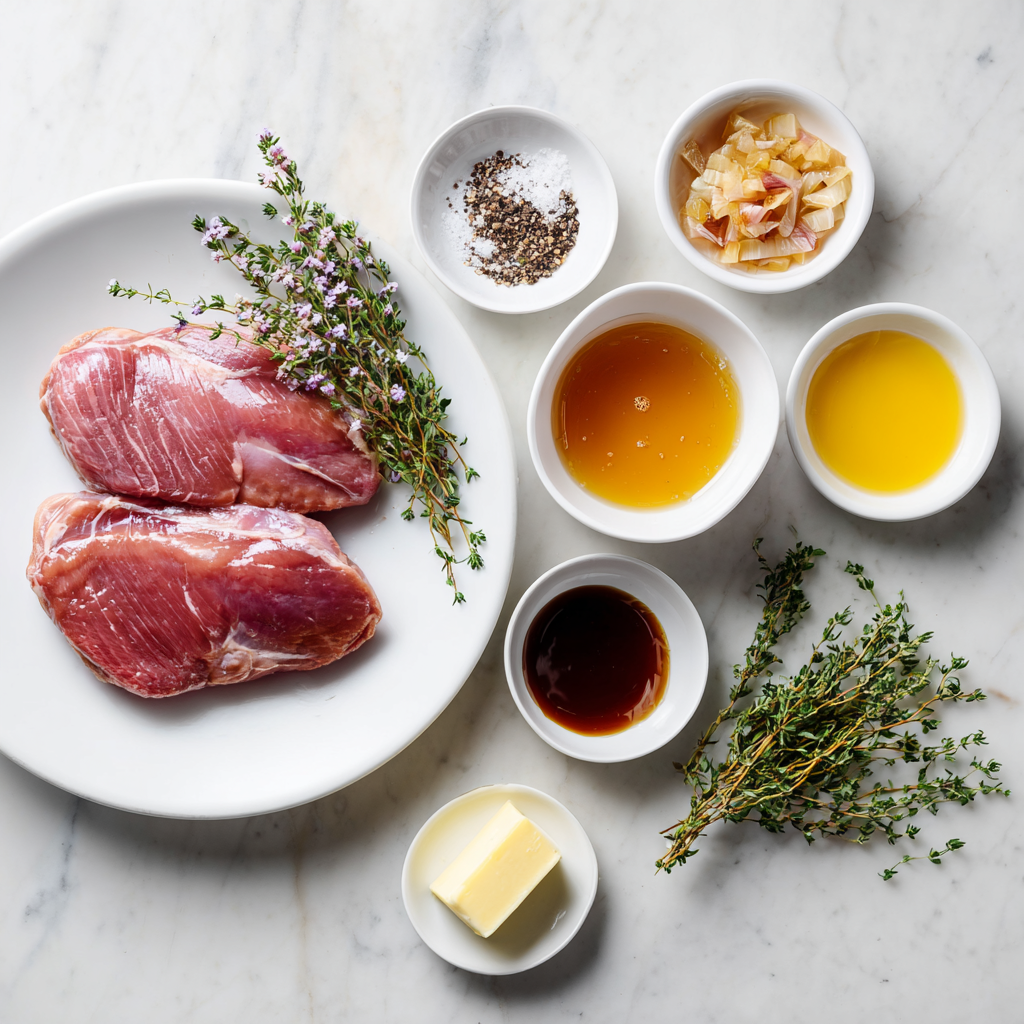
Each ingredient plays a specific role, from seasoning the meat to balancing sweetness and acidity in the glaze.
Instructions
How to Make Duck Breast with Lavender Honey Glaze
- Remove the duck breasts from the refrigerator 20 minutes before cooking to allow them to come to room temperature. Pat them dry thoroughly with paper towels.
- Using a sharp knife, score the skin in a shallow crosshatch pattern, being careful not to cut into the meat. This helps the fat render evenly.
- Season both sides of the duck breasts generously with salt and black pepper.
- Place the duck breasts skin-side down in a cold skillet. Turn the heat to medium-low and allow the fat to slowly render for 8–10 minutes until the skin is deep golden and crispy.
- Pour off excess rendered fat, leaving about 1 tablespoon in the pan. Flip the duck breasts and cook for 2–4 minutes for medium-rare, depending on thickness.
- Remove duck from the pan and let it rest on a cutting board, loosely tented with foil.
- In the same pan, reduce heat to low and add butter, honey, lavender, and garlic. Stir gently until fragrant, about 1 minute.
- Add apple cider vinegar to balance the sweetness. Simmer briefly until the glaze thickens slightly.
- Slice the rested duck breast against the grain and spoon the lavender honey glaze generously over the top.
- Garnish with fresh thyme or a few lavender buds if desired, and serve immediately.
Tips for Perfect Duck Breast Every Time
- Start with a cold pan: This allows the duck fat to render slowly and evenly.
- Do not rush the skin: Crispy skin requires patience and low heat.
- Rest the meat: Resting ensures juicy slices and prevents moisture loss.
- Use culinary lavender only: Decorative lavender may be too strong or bitter.
- Taste your glaze: Adjust acidity or sweetness to your preference.
Flavor Variations to Try
This recipe is wonderfully adaptable. Here are a few creative twists:
Citrus Lavender Duck
Add orange zest and a splash of orange juice to the glaze for a bright, citrusy finish.
Lavender Balsamic Duck
Swap apple cider vinegar for balsamic vinegar for deeper sweetness and complexity.
Spiced Honey Duck
Add a pinch of crushed pink peppercorns or ground coriander to the glaze for subtle warmth.
Herb-Forward Version
Infuse the glaze with rosemary or thyme alongside lavender for a more savory profile.
Serving Suggestions
Duck Breast with Lavender Honey Glaze pairs beautifully with both rustic and refined sides:
- Creamy mashed potatoes or parsnip purée
- Roasted carrots, fennel, or beets
- Wild rice or farro
- Simple arugula salad with lemon vinaigrette
- Crusty artisan bread to soak up extra glaze
For wine, opt for a Pinot Noir, Grenache, or a light-bodied Syrah.
Cultural & Culinary Context
Lavender has deep roots in Mediterranean and Provençal cooking, especially in southern France. While often associated with sweets, lavender has historically been used with lamb, poultry, and game meats.
Duck, meanwhile, has been a staple protein in European cuisine for centuries, prized for its richness and versatility. The combination of duck, honey, and floral notes reflects a classic French philosophy: balancing fat, sweetness, acidity, and aroma.
This dish pays homage to that tradition while remaining approachable for modern home kitchens.
Make-Ahead & Storage Tips
- Duck breasts are best cooked fresh but can be seared ahead and reheated gently.
- The lavender honey glaze can be prepared up to 3 days in advance and refrigerated.
- Store leftovers in an airtight container for up to 2 days.
- Reheat gently to avoid overcooking the duck.
Final Thoughts
Duck Breast with Lavender Honey Glaze is the kind of recipe that feels indulgent without being intimidating. With a few quality ingredients and mindful technique, you can create a dish that looks stunning, tastes luxurious, and leaves a lasting impression.
Whether you’re cooking for guests or treating yourself to a special dinner, this recipe proves that gourmet cooking can be both accessible and deeply satisfying.
Duck Breast with Lavender Honey Glaze
Crispy pan-seared duck breast finished with a delicate lavender-infused honey glaze, perfect for an elegant main course.
Ingredients
Equipment
Method
- Pat duck breasts dry and score the skin without cutting into the meat.
- Season both sides with salt and black pepper.
- Place duck skin-side down in a cold skillet and cook over medium-low heat until fat renders and skin is crispy.
- Flip duck and cook briefly until medium-rare. Remove and rest.
- In the same pan, melt butter and add honey, lavender, garlic, and vinegar to form the glaze.
- Slice duck breast and spoon glaze over before serving.
Notes
Use culinary-grade lavender only. Do not overcook the duck to keep it tender and juicy.