The Best Fluffy Pancakes recipe you will fall in love with. Full of tips and tricks to help you make the best pancakes.

The Creamy Strawberry Banana Smoothie Bowl Recipe is a perfect balance of freshness, nourishment, and indulgent texture. Thick, spoonable, naturally sweet, and endlessly customizable, this smoothie bowl transforms a classic strawberry banana smoothie into a satisfying meal you can slow down and enjoy.
Unlike drinkable smoothies, smoothie bowls are designed to be eaten with a spoon. That subtle difference changes everything—from texture and toppings to satiety and presentation. This recipe focuses on achieving that ultra-creamy consistency while maintaining clean flavors and simple ingredients.
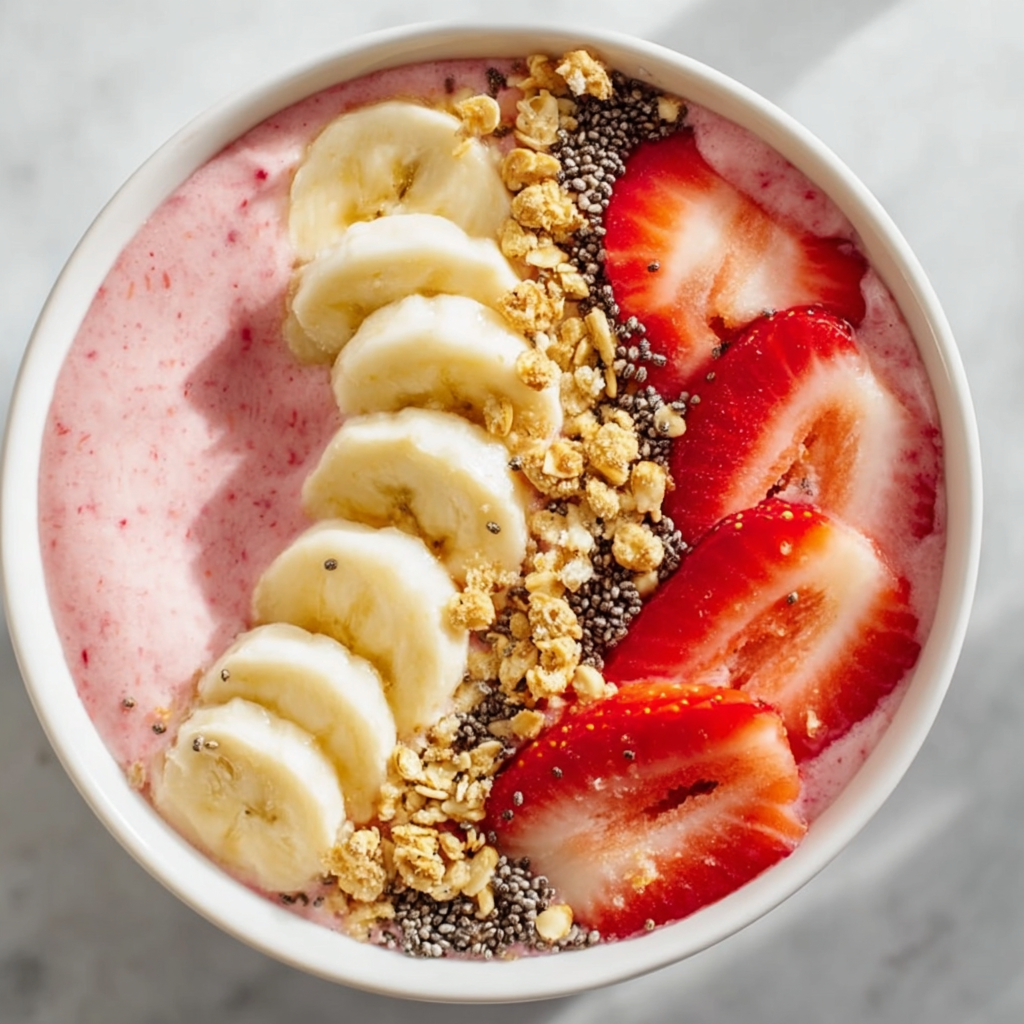
Whether you’re looking for a refreshing breakfast, a post-workout option, or a wholesome midday reset, this strawberry banana smoothie bowl delivers energy, fiber, and natural sweetness without relying on refined sugars or artificial ingredients.
Why Strawberry and Banana Are a Perfect Pair
Strawberries and bananas have long been one of the most popular fruit combinations, and for good reason. Their flavors complement each other beautifully: strawberries provide brightness and mild acidity, while bananas add body, creaminess, and natural sweetness.
From a nutritional standpoint, the pairing is just as effective. Strawberries are rich in vitamin C and antioxidants, while bananas contribute potassium, fiber, and natural carbohydrates that support sustained energy. When blended together, they create a smooth, balanced base that doesn’t require added sugar to taste satisfying.
This harmony makes strawberry banana smoothie bowls especially appealing to both adults and children.
What Makes a Smoothie Bowl Truly Creamy
Creaminess is the defining feature of a great smoothie bowl. Achieving that thick, luscious texture requires a few intentional choices:
- Using frozen fruit instead of fresh
- Limiting added liquid
- Including a creamy element like yogurt or banana
- Blending patiently rather than rushing
This recipe uses frozen strawberries and frozen banana slices as the foundation. Greek yogurt adds richness and protein, while a small amount of milk helps the blender move without thinning the mixture too much.
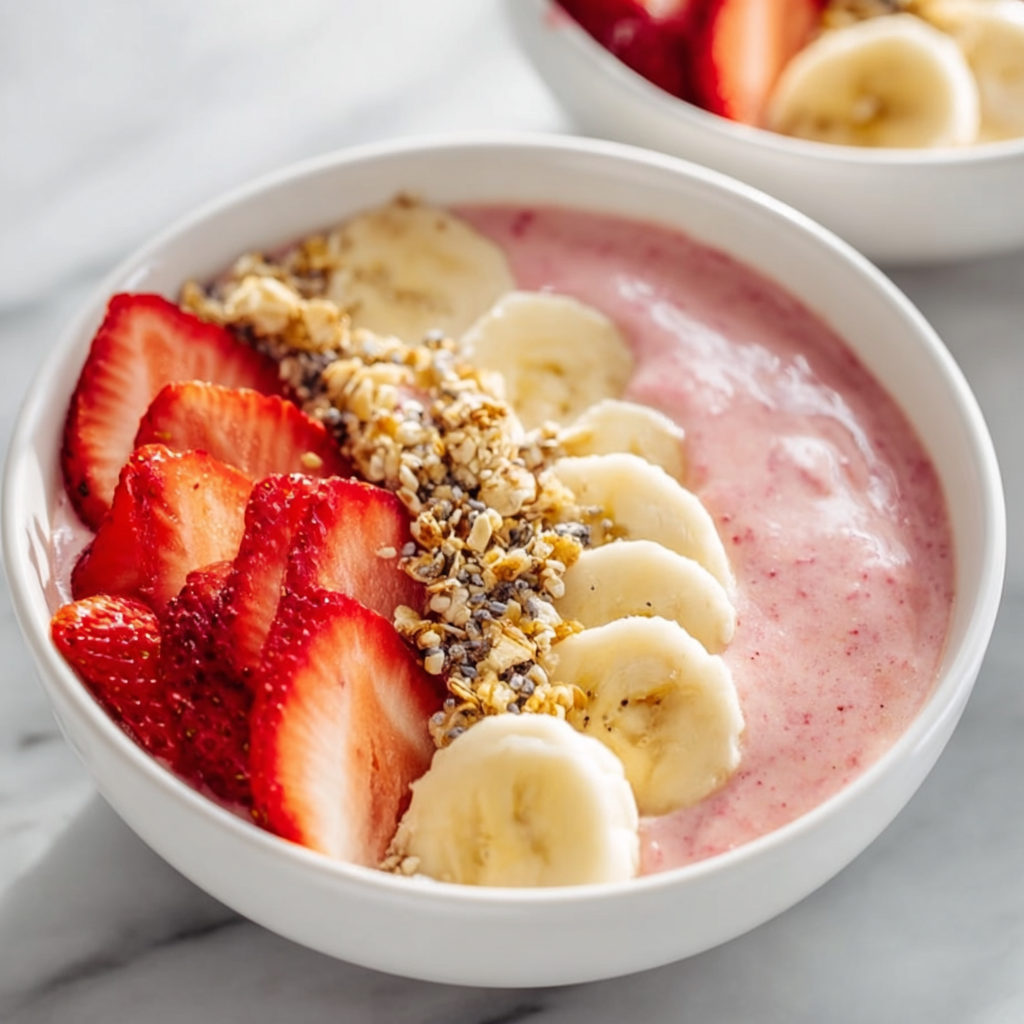
The result is a bowl that holds toppings beautifully instead of swallowing them.
Ingredients
Smoothie Bowl Base
- 1 cup frozen strawberries
- 1 frozen banana, sliced
- ½ cup Greek yogurt (plain or vanilla)
- ¼–⅓ cup almond milk or milk of choice
- 1 teaspoon honey or maple syrup (optional)
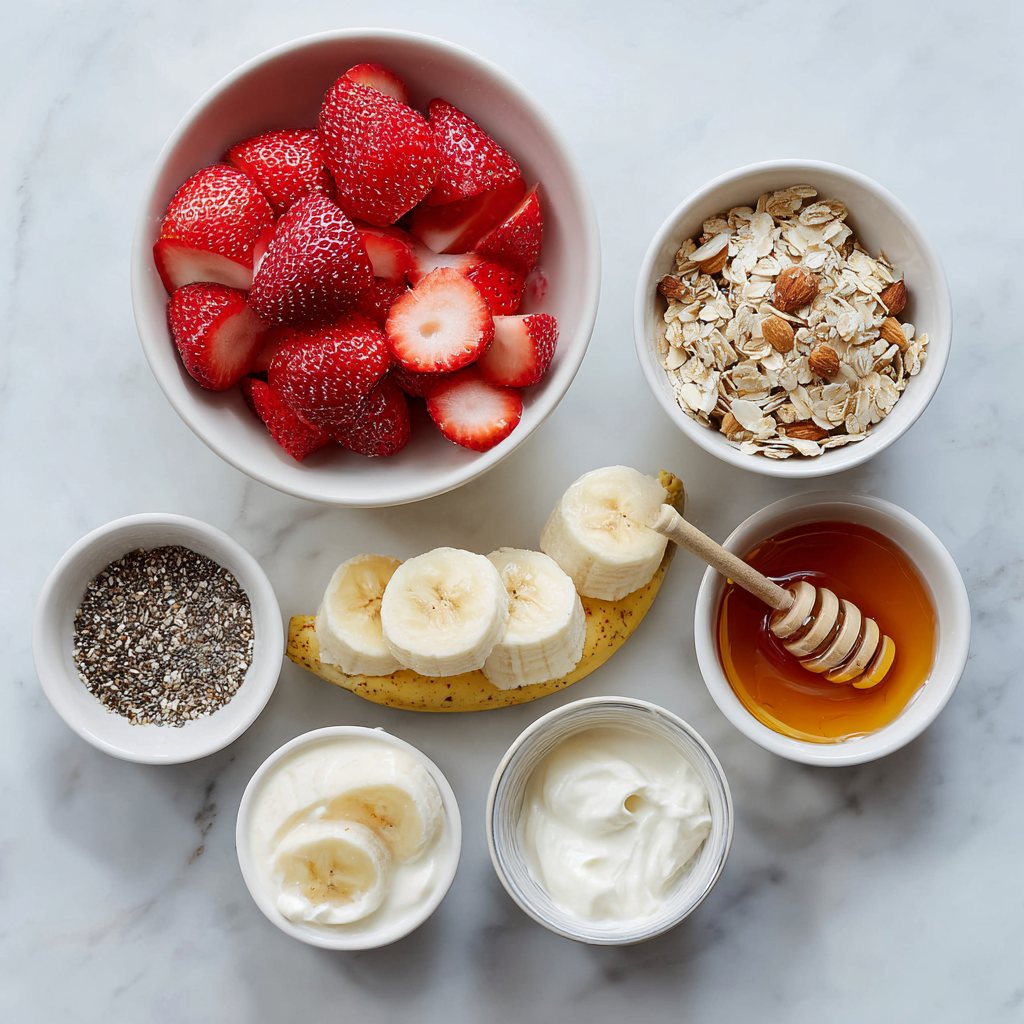
Topping Ideas
- Fresh strawberry slices
- Banana rounds
- Granola
- Chia seeds
- Shredded coconut
- Nut butter drizzle
Instructions
- Add frozen strawberries and frozen banana slices to a high-speed blender.
- Add Greek yogurt and almond milk. Start with the smaller amount of liquid.
- Blend on low, gradually increasing speed. Stop and scrape down sides as needed.
- Continue blending until thick, smooth, and creamy. Add more milk only if necessary.
- Taste and blend in honey or maple syrup if extra sweetness is desired.
- Spoon the smoothie into a bowl.
- Add toppings and serve immediately.
Why This Recipe Works for Breakfast
This smoothie bowl is more than just fruit—it’s a balanced breakfast when topped thoughtfully. The combination of carbohydrates from fruit, protein from yogurt, and fats from seeds or nuts helps keep you full and energized.
Unlike sugary breakfast options that cause energy crashes, this bowl provides steady fuel. It’s light enough to feel refreshing, yet substantial enough to carry you through the morning.
Because it’s easy to digest, it’s also an excellent option before workouts or busy days.
Choosing the Right Yogurt
Greek yogurt is ideal for smoothie bowls because of its thickness and protein content. However, this recipe is flexible:
- Dairy-free: Use coconut or almond yogurt
- Higher protein: Use skyr or high-protein Greek yogurt
- Extra creamy: Use full-fat yogurt
Avoid overly sweetened yogurts, as they can overpower the fruit flavors.
Liquid Control: The Most Important Step
One of the most common smoothie bowl mistakes is adding too much liquid. Unlike drinkable smoothies, bowls need minimal liquid to stay thick.
Always start with less liquid than you think you need. You can add more, but you can’t take it out once blended. A thick mixture ensures your toppings stay visible and textured rather than sinking.
Toppings That Add Texture and Nutrition
Toppings aren’t just decorative—they’re functional. They add crunch, contrast, and additional nutrients.
Great topping combinations include:
- Granola + chia seeds for crunch and fiber
- Coconut flakes + almonds for healthy fats
- Nut butter drizzle for richness
- Fresh fruit for brightness
The key is balance. Too many toppings overwhelm the bowl; a few well-chosen ones elevate it.
Smoothie Bowl vs. Smoothie: What’s the Difference?
While they use similar ingredients, smoothie bowls and smoothies serve different purposes. Smoothies are designed for portability and speed, while bowls encourage mindful eating.
Eating with a spoon slows consumption, improves digestion, and increases satiety. This makes smoothie bowls especially effective as a meal rather than just a beverage.
Dietary Variations
This recipe adapts easily to different needs:
- Vegan: Use plant-based yogurt and maple syrup
- Gluten-Free: Naturally gluten-free
- High-Protein: Add protein powder or extra yogurt
- Low-Sugar: Skip added sweeteners entirely
Each variation preserves the core flavor while adjusting nutrition.
Serving Suggestions
Serve your smoothie bowl:
- As a plated breakfast
- After workouts
- As a light lunch with toast on the side
- In smaller portions for kids
It also works well as a “build-your-own” option for families.
Cultural Context of Smoothie Bowls
Smoothie bowls gained popularity through surf and wellness cultures, particularly in tropical regions where fresh fruit is abundant. Over time, they evolved into a global breakfast staple, appreciated for both nutrition and visual appeal.
This strawberry banana version reflects that evolution—simple, accessible, and adaptable to everyday kitchens.
Make-Ahead & Storage
Smoothie bowls are best enjoyed fresh. However:
- Fruit can be pre-sliced and frozen
- Toppings can be prepped in advance
- The base can be blended and frozen, then re-blended briefly
Fresh blending ensures optimal texture and flavor.
Why You’ll Keep Coming Back to This Recipe
This smoothie bowl isn’t trendy—it’s timeless. The ingredients are familiar, the method is reliable, and the result is consistently satisfying. It’s a recipe that fits into real routines and supports long-term habits rather than quick fixes.
Once you master the texture, you can adapt it endlessly with new fruits and toppings.
Creamy Strawberry Banana Smoothie Bowl
A thick and creamy strawberry banana smoothie bowl made with frozen fruit and yogurt, perfect for a nourishing breakfast.
Ingredients
Equipment
Method
- Add frozen fruit, yogurt, and milk to blender.
- Blend until thick and creamy, scraping sides as needed.
- Spoon into bowl and add toppings.
Notes
Use frozen fruit for best texture.