The Best Fluffy Pancakes recipe you will fall in love with. Full of tips and tricks to help you make the best pancakes.

Making homemade pasta might sound intimidating, but it is actually one of the most satisfying and surprisingly simple cooking skills you can learn. You don’t need expensive equipment, specialty tools, or a pasta machine. With just a few pantry staples and a rolling pin, you can create fresh, silky pasta that rivals anything from a restaurant.
Fresh pasta has a completely different texture compared to dried boxed pasta. It’s softer, more delicate, and absorbs sauces beautifully. Once you experience the taste of hand-rolled pasta, it becomes very difficult to go back.
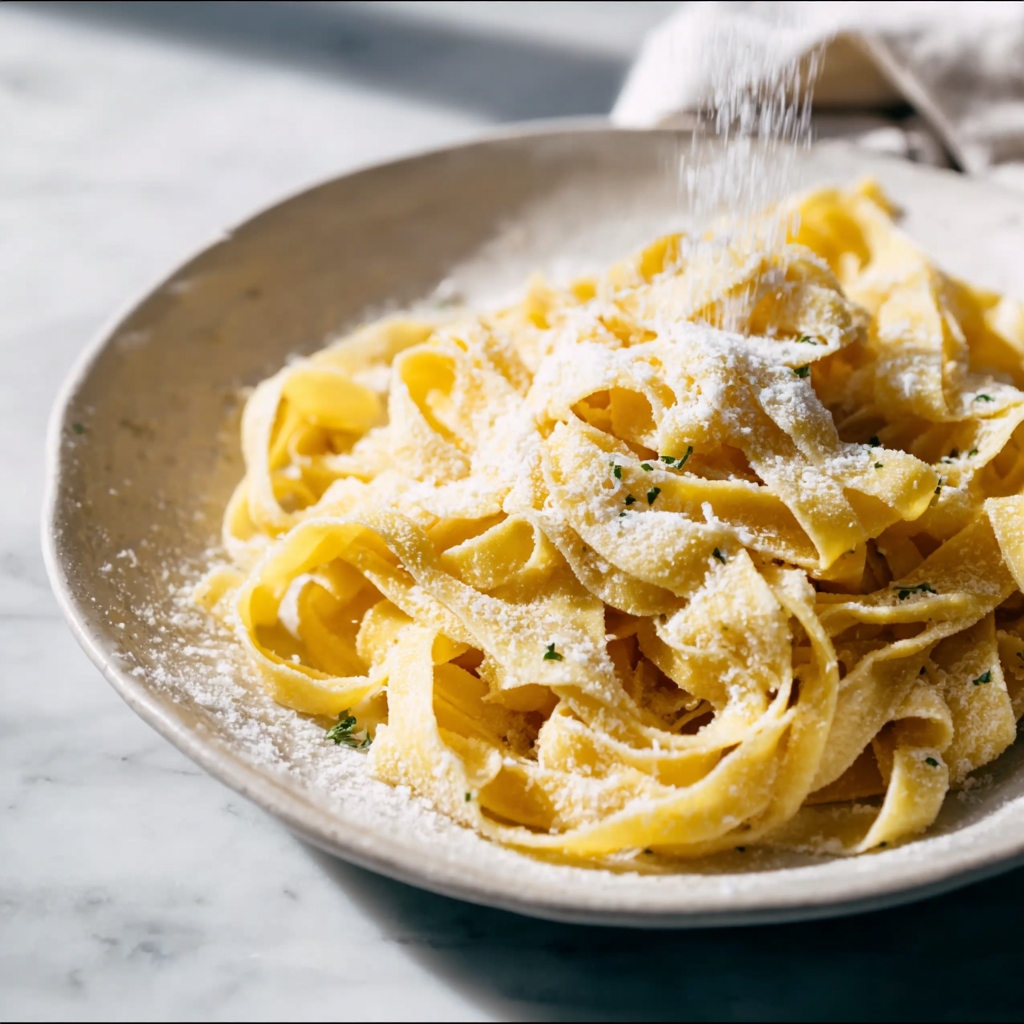
This guide walks you through everything you need to know — from dough preparation to shaping techniques — so you can confidently make pasta at home using only basic kitchen tools.
Why Make Pasta Without a Machine?
While pasta machines are helpful, they are absolutely not required. Traditional pasta was made by hand for centuries before machines became common household tools.
Here’s why hand-rolled pasta is worth trying:
- No Special Equipment Needed – A rolling pin works perfectly.
- More Control Over Texture – You feel the dough as you work it.
- Authentic & Traditional Technique – True old-world cooking.
- Surprisingly Easy – Simpler than most people expect.
- Deeply Rewarding – Handmade food always feels special.
Once you learn the fundamentals, the process becomes intuitive.
Understanding Fresh Pasta Dough
Fresh pasta dough is beautifully simple. It relies on just a few ingredients working together.
Flour provides structure.
Eggs provide richness and elasticity.
Salt enhances flavor.
Olive oil adds smoothness (optional but helpful).
Unlike bread dough, pasta dough is firm, dense, and silky.
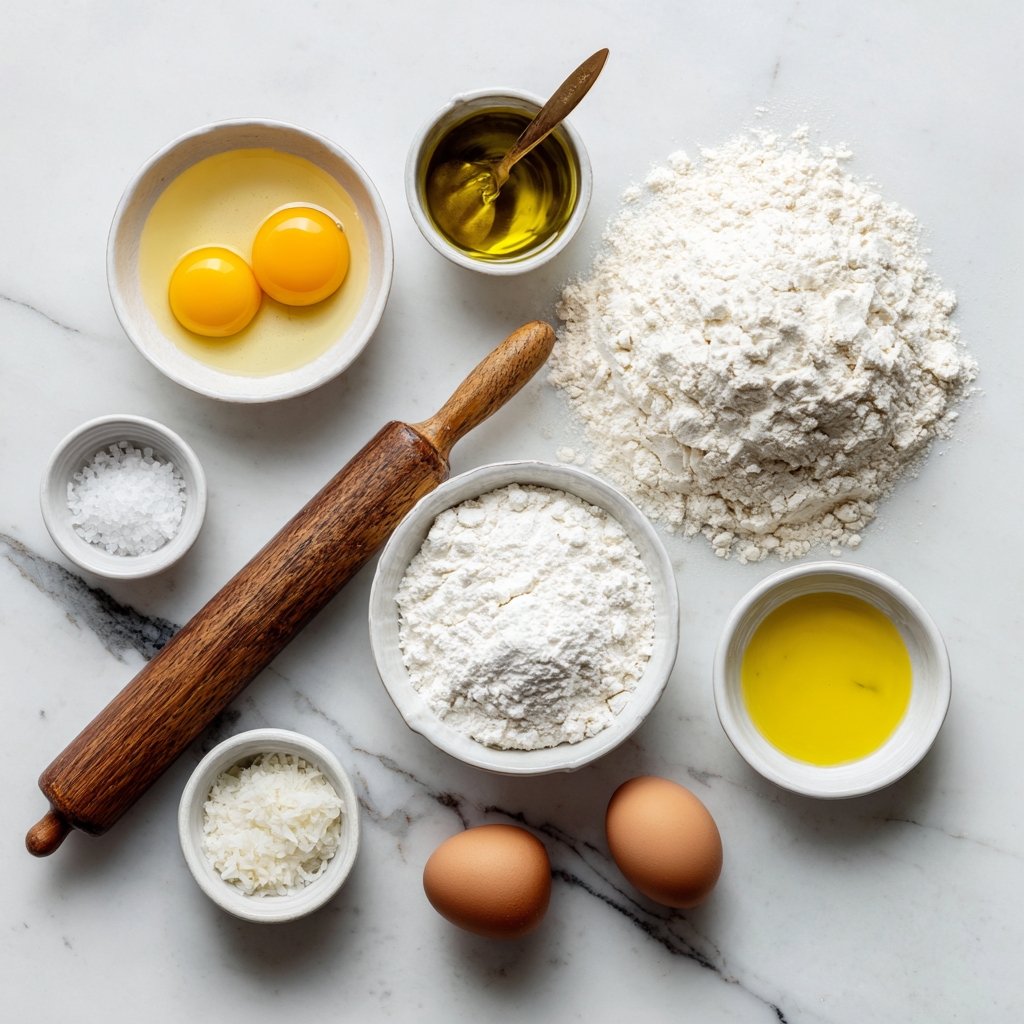
Ingredients
- 2 cups all-purpose flour (plus extra for dusting)
- 3 large eggs
- ½ teaspoon salt
- 1 tablespoon olive oil (optional)
Instructions
1. Create the Flour Well
Place the flour directly onto a clean work surface.
Form a mound, then create a deep well in the center.
Think of a volcano shape.
This method helps incorporate eggs gradually.
2. Add Eggs & Salt
Crack the eggs into the center well.
Add salt and olive oil if using.
3. Incorporate the Flour
Using a fork:
Gently whisk the eggs.
Slowly pull flour from the edges into the egg mixture.
Work gradually to avoid breaking the well.
4. Form the Dough
Once the mixture thickens:
Use your hands to bring everything together.
Press, fold, and gather until a shaggy dough forms.
5. Knead the Dough
Knead for about 8–10 minutes.
Technique:
Push dough forward with your palm → fold → rotate → repeat.
The dough should become:
✔ Smooth
✔ Elastic
✔ Slightly firm
✔ Not sticky
6. Rest the Dough
Wrap tightly in plastic or cover with a bowl.
Rest 30 minutes at room temperature.
Critical step.
Resting relaxes gluten and makes rolling easier.
7. Roll the Dough
Cut dough into smaller portions.
Flatten slightly.
Using a rolling pin:
Roll outward from center.
Rotate dough frequently.
Goal: Very thin sheet.
You should almost see light through it.
8. Fold & Cut
Lightly dust sheet with flour.
Fold loosely.
Cut into desired shapes:
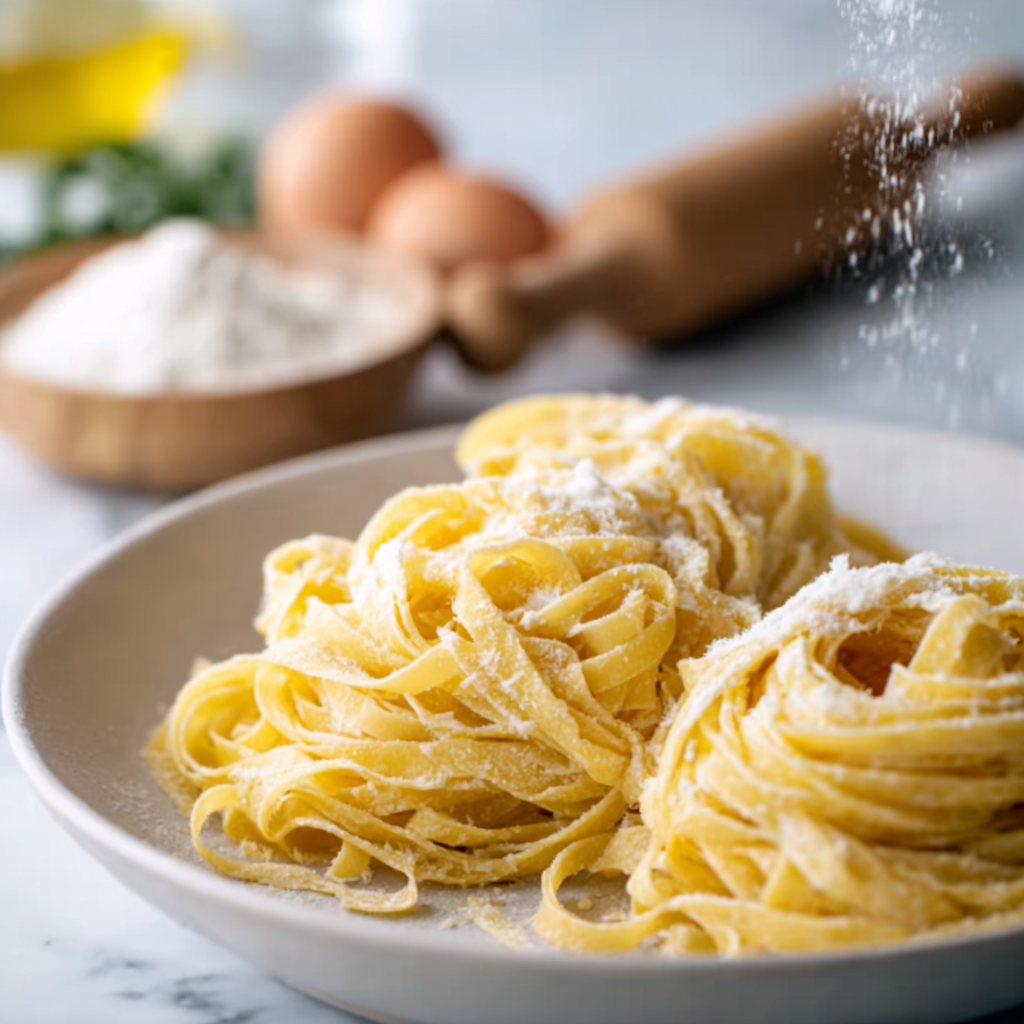
✔ Fettuccine (thin ribbons)
✔ Tagliatelle (wide ribbons)
✔ Pappardelle (extra wide)
9. Separate the Noodles
Gently toss noodles with flour.
Prevents sticking.
10. Cook the Pasta
Boil salted water.
Fresh pasta cooks FAST.
Typically 2–4 minutes.
Taste to check doneness.
How Thin Should Pasta Be?
This is the most common beginner question.
Fresh pasta should be thin enough that:
✔ It feels silky
✔ It bends easily
✔ It is not doughy
✔ Sauce clings beautifully
Too thick = heavy & chewy.
Professional Tips for Perfect Pasta
Use Enough Flour (But Not Too Much)
Sticky dough → Add light dusting.
Dry crumbly dough → Add tiny drops of water.
Kneading Matters
Under-kneaded dough = rough texture.
Well-kneaded dough = smooth, elastic sheets.
Resting is Non-Negotiable
Skipping rest = tough dough.
Roll Gradually
Avoid forcing dough thin too quickly.
Dust to Prevent Sticking
But avoid excessive flour buildup.
Common Mistakes & Fixes
Problem: Dough Too Sticky
✔ Add flour gradually
Problem: Dough Too Dry
✔ Add drops of water
Problem: Dough Springs Back
✔ Needs more resting time
Problem: Pasta Too Thick
✔ Roll thinner next time
Creative Pasta Shape Ideas
Once comfortable, explore shapes:
✔ Rustic ribbons
✔ Hand-cut squares
✔ Thick noodles
✔ Simple lasagna sheets
No machine = charming rustic aesthetic.
Sauce Pairing Suggestions
Fresh pasta pairs beautifully with:
- Creamy sauces
- Butter-based sauces
- Olive oil & herbs
- Light tomato sauces
- Garlic sauces
Because fresh pasta is delicate, avoid overly heavy sauces.
Why Fresh Pasta Tastes Different
Fresh pasta contains eggs.
Resulting benefits:
✔ Richer flavor
✔ Silkier texture
✔ Softer bite
✔ Better sauce absorption
Dried pasta excels for hearty sauces, but fresh pasta shines in elegance.
Storage & Make-Ahead Tips
Short-Term Storage
Dust pasta lightly with flour.
Refrigerate up to 24 hours.
Freezing Fresh Pasta
Freeze on tray first.
Then transfer to container.
Cook directly from frozen.
Drying Pasta
Possible but requires proper airflow.
Beginner-Friendly Dough Feel Guide
Perfect dough feels:
✔ Smooth like clay
✔ Elastic but firm
✔ Not tacky
✔ Silky when rolled
If dough feels wrong, adjustments are easy.
Why This Skill is Worth Learning
Homemade pasta is more than food.
It’s:
✔ A foundational culinary skill
✔ A crowd-pleasing technique
✔ Deeply satisfying
✔ Surprisingly economical
✔ Impressively gourmet
Homemade Pasta (Without a Machine)
A simple and traditional method for making fresh homemade pasta using basic ingredients and a rolling pin, no pasta machine required.
Ingredients
Equipment
Method
- Create a flour well on a clean surface.
- Add eggs, salt, and olive oil.
- Gradually incorporate flour into eggs.
- Form and knead dough until smooth.
- Rest dough for 30 minutes.
- Roll dough thin with rolling pin.
- Cut into desired pasta shapes.
- Cook fresh pasta in boiling salted water.
Notes
Resting dough is essential for easy rolling. Fresh pasta cooks quickly.