The Best Fluffy Pancakes recipe you will fall in love with. Full of tips and tricks to help you make the best pancakes.

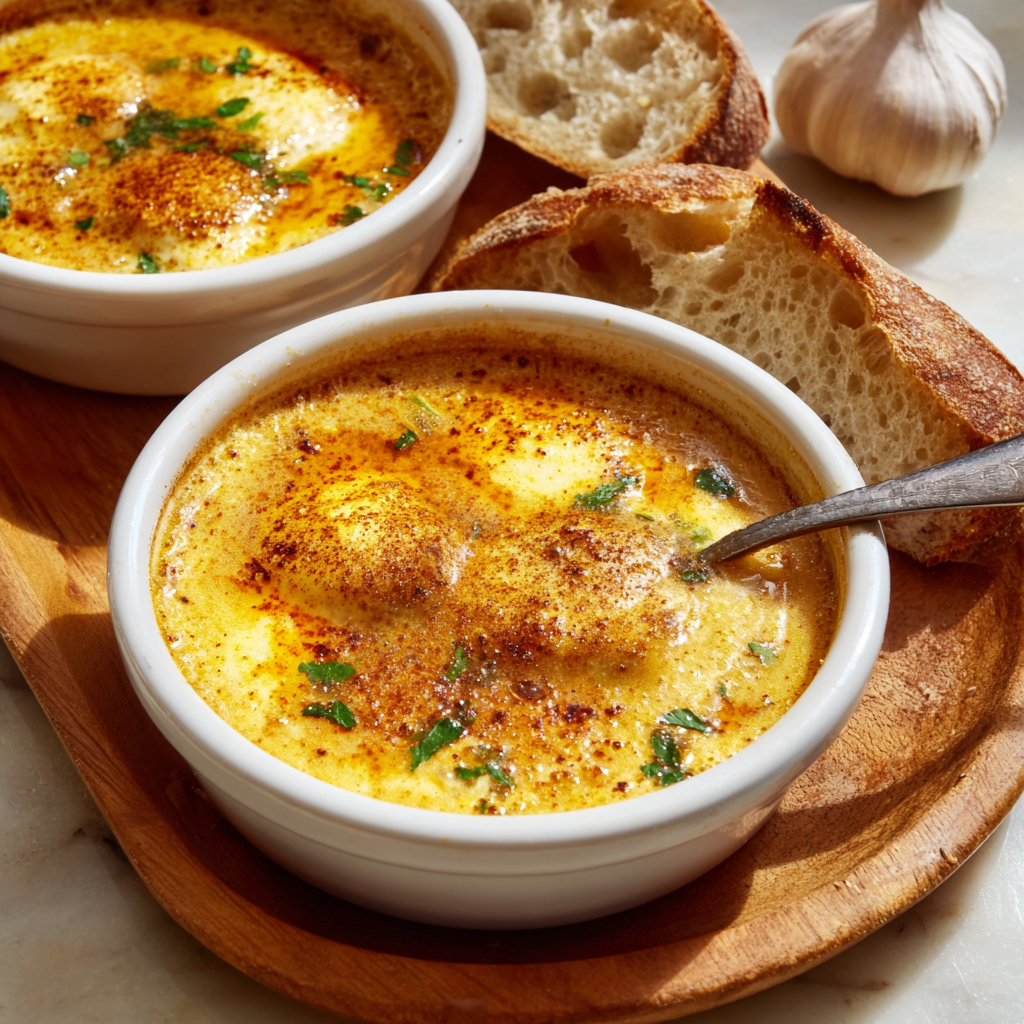
Sopa de ajo, also known as Castilian garlic soup, is one of Spain’s most beloved traditional dishes — humble, rustic, and deeply comforting. Made with just a handful of pantry staples like garlic, olive oil, bread, paprika, and eggs, this soup is a perfect example of how Spanish cuisine transforms simple ingredients into something soulful and unforgettable.
Unlike creamy garlic soups found elsewhere in Europe, authentic sopa de ajo is light yet intensely flavorful, with a smoky paprika-infused broth and silky strands of egg that gently thicken the soup. It’s warming without being heavy, bold without being complicated, and steeped in centuries of culinary history.
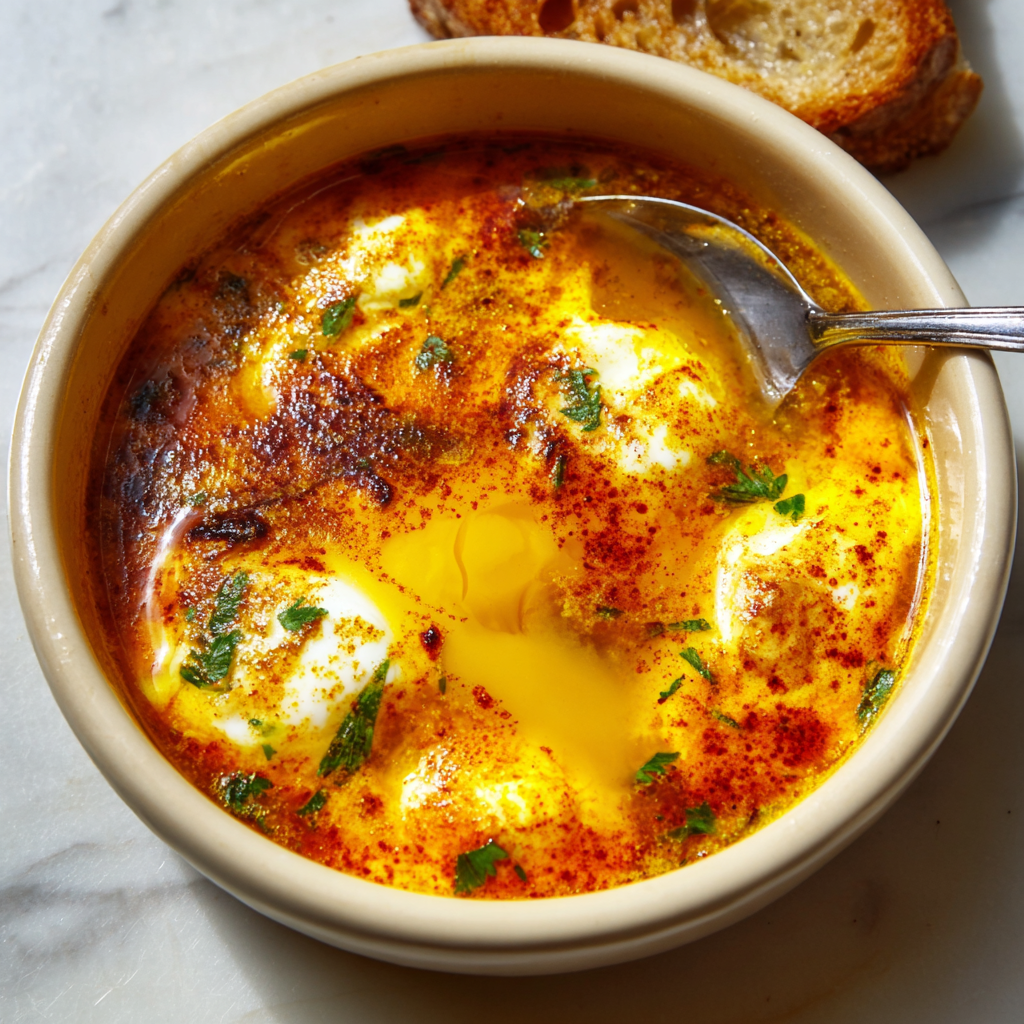
This is not a modern reinvention — this is the real, traditional Spanish garlic soup, prepared the way it has been made in Castile and León for generations.
The Origins of Sopa de Ajo
Sopa de ajo has its roots in rural Spain, where shepherds and laborers relied on inexpensive, filling meals to sustain them through long, cold days. Bread that had gone stale was never wasted — instead, it became the backbone of soups like this one.
Garlic, olive oil, and paprika were widely available and affordable, making them essential components of peasant cooking. Over time, sopa de ajo became a cultural staple, especially in central Spain, often served for breakfast during Lent or as a late-night meal after festivities.
Despite its simplicity, this soup carries deep emotional significance in Spanish households. Every family has its own version, but the foundation remains unchanged.
What Makes Authentic Sopa de Ajo Different
True sopa de ajo is defined by technique, not excess ingredients. There is no cream, no onions, no unnecessary vegetables. The flavor comes from:
- Slowly toasted garlic in olive oil
- Sweet smoked paprika (never burned)
- Day-old bread to thicken the broth naturally
- Eggs added gently at the end
The result is a broth that’s savory, smoky, garlicky, and incredibly comforting.
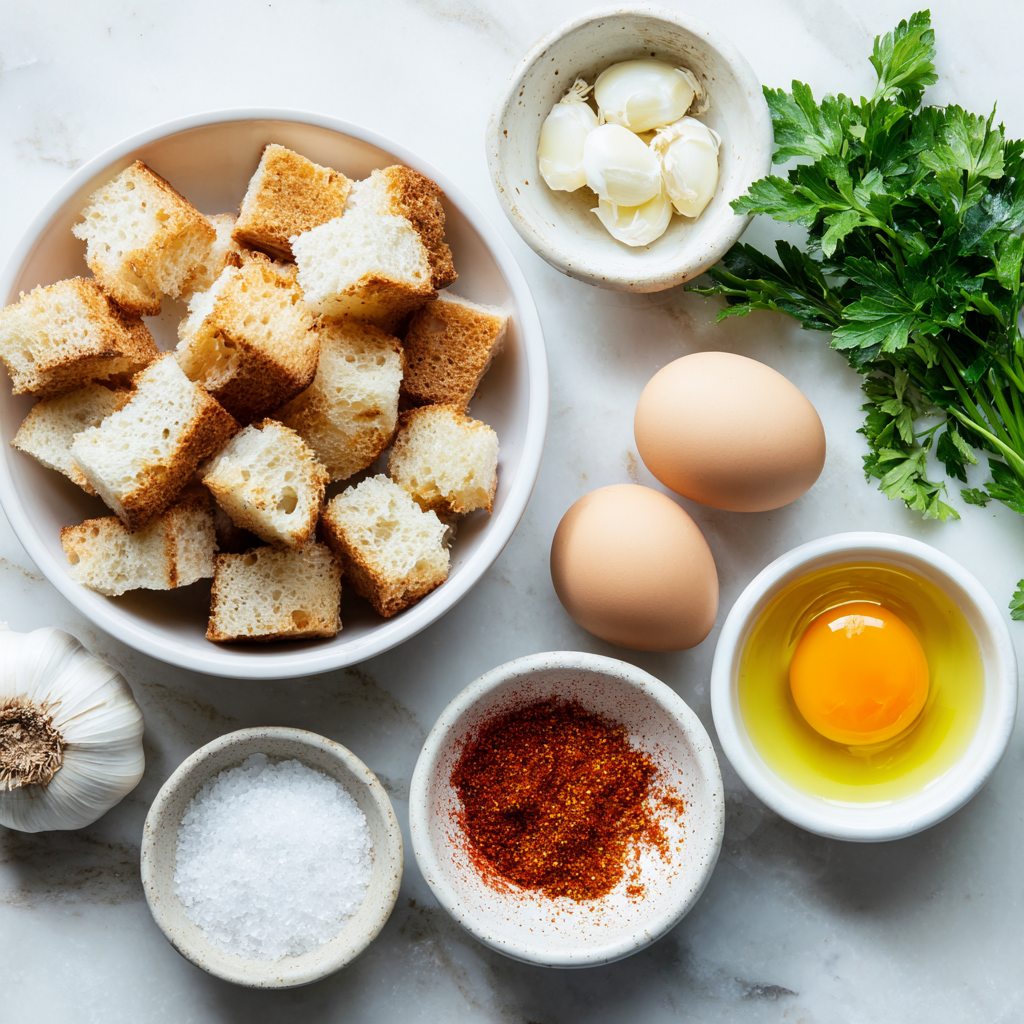
Ingredients
Each ingredient plays a critical role — quality matters here.
- Extra virgin olive oil
- Garlic cloves – thinly sliced
- Day-old rustic bread – cut into cubes or slices
- Sweet smoked paprika (pimentón dulce)
- Water or light chicken broth
- Salt – to taste
- Eggs – whole
- Fresh parsley – optional garnish
Instructions
- Heat olive oil in a heavy pot over medium-low heat.
- Add sliced garlic and cook slowly until lightly golden and fragrant, never browned.
- Remove the pot briefly from heat and stir in smoked paprika to prevent burning.
- Return to heat and immediately add bread, stirring to coat in the garlic oil.
- Pour in water or broth and add salt to taste.
- Bring to a gentle simmer and cook for 15–20 minutes, allowing the bread to soften and thicken the soup.
- Lower heat and crack eggs directly into the soup, spacing them apart.
- Cover and cook gently until egg whites are set and yolks remain soft, or stir for a ribboned texture.
- Taste and adjust seasoning.
- Serve hot, garnished with parsley if desired.
Bread: The Soul of the Soup
In authentic sopa de ajo, bread is not a garnish — it’s a structural ingredient. Traditionally, pan candeal or another dense country loaf is used. As it simmers, the bread partially dissolves, giving the broth body without making it heavy.
Avoid soft sandwich bread; it will disintegrate too quickly and ruin the texture.
The Role of Paprika in Spanish Garlic Soup
Paprika is the defining spice of sopa de ajo. Spanish pimentón dulce adds warmth and subtle smokiness without heat. Some regions use pimentón de la Vera, prized for its deep, smoky aroma.
One rule is sacred: never burn the paprika. Always remove the pot from heat before adding it, or the soup will become bitter.
Egg Styles: Traditional Options
Authentic sopa de ajo is served with eggs in one of two traditional ways:
- Poached eggs: cracked whole into the soup and gently cooked
- Ribboned eggs: lightly beaten and stirred in, similar to egg drop soup
Both are authentic — choose based on texture preference.
Tips for Perfect Sopa de Ajo
- Use low heat when cooking garlic
- Always add paprika off heat
- Use day-old bread, never fresh
- Don’t over-salt early; flavors concentrate as it simmers
- Serve immediately for best texture
Regional Variations in Spain
While the base remains consistent, small regional differences exist:
- Castile-León: Pure and minimal, often with poached eggs
- Madrid: Slightly thicker, sometimes with extra bread
- Andalusia: Occasionally includes cumin
- Modern versions: Add ham — not traditional but popular
This recipe stays true to the classic Castilian style.
When Is Sopa de Ajo Traditionally Eaten?
- Cold winter mornings
- Lent and Holy Week
- Late-night meals
- Comfort food during illness
It’s deeply warming and restorative, often considered a natural remedy for colds.
Nutritional Benefits
Despite its richness of flavor, sopa de ajo is surprisingly balanced:
- Garlic supports immune health
- Olive oil provides healthy fats
- Eggs add protein
- Bread provides energy
It’s filling without being heavy — true Mediterranean nourishment.
Make-Ahead and Storage
- Best served fresh
- Refrigerate leftovers up to 2 days
- Reheat gently; avoid boiling
- Add fresh egg when reheating if desired
Why This Recipe Is Truly Authentic
This recipe follows traditional Spanish technique, ingredient ratios, and cooking method — no shortcuts, no modern substitutions. It reflects how sopa de ajo has been prepared for centuries in Spanish homes.
If you’ve never tasted real sopa de ajo, this version will surprise you with its depth and elegance.
Final Thoughts
Authentic sopa de ajo proves that great food doesn’t require luxury ingredients — only respect for tradition and technique. This is Spanish comfort food at its purest: warm, rustic, deeply aromatic, and profoundly satisfying.
Once you make it, you’ll understand why this humble garlic soup has endured for generations.
Authentic Sopa de Ajo
Traditional Spanish garlic soup made with olive oil, garlic, bread, smoked paprika, and eggs.
Ingredients
Equipment
Method
- Heat olive oil over medium-low heat.
- Add garlic and cook gently until lightly golden.
- Remove from heat and stir in smoked paprika.
- Add bread and return to heat, stirring well.
- Pour in water or broth and season with salt.
- Simmer for 20 minutes until slightly thickened.
- Crack eggs into soup and cook gently until set.
Notes
Serve immediately with crusty bread.