The Best Fluffy Pancakes recipe you will fall in love with. Full of tips and tricks to help you make the best pancakes.

Few dishes capture the quiet elegance of Persian home cooking quite like dopiazeh aloo. Simple, comforting, and deeply flavorful, this traditional Persian potato curry proves that you don’t need a long list of spices or complicated techniques to create something memorable.
Dopiazeh aloo translates loosely to “potatoes with two onions,” a nod to the dish’s defining feature: lots of slow-cooked onions. Those onions form the foundation of the sauce, melting down into a golden, aromatic base that coats tender potatoes in warmth and richness. Finished with turmeric, garlic, and a touch of tomato paste, this dish is humble yet incredibly satisfying.
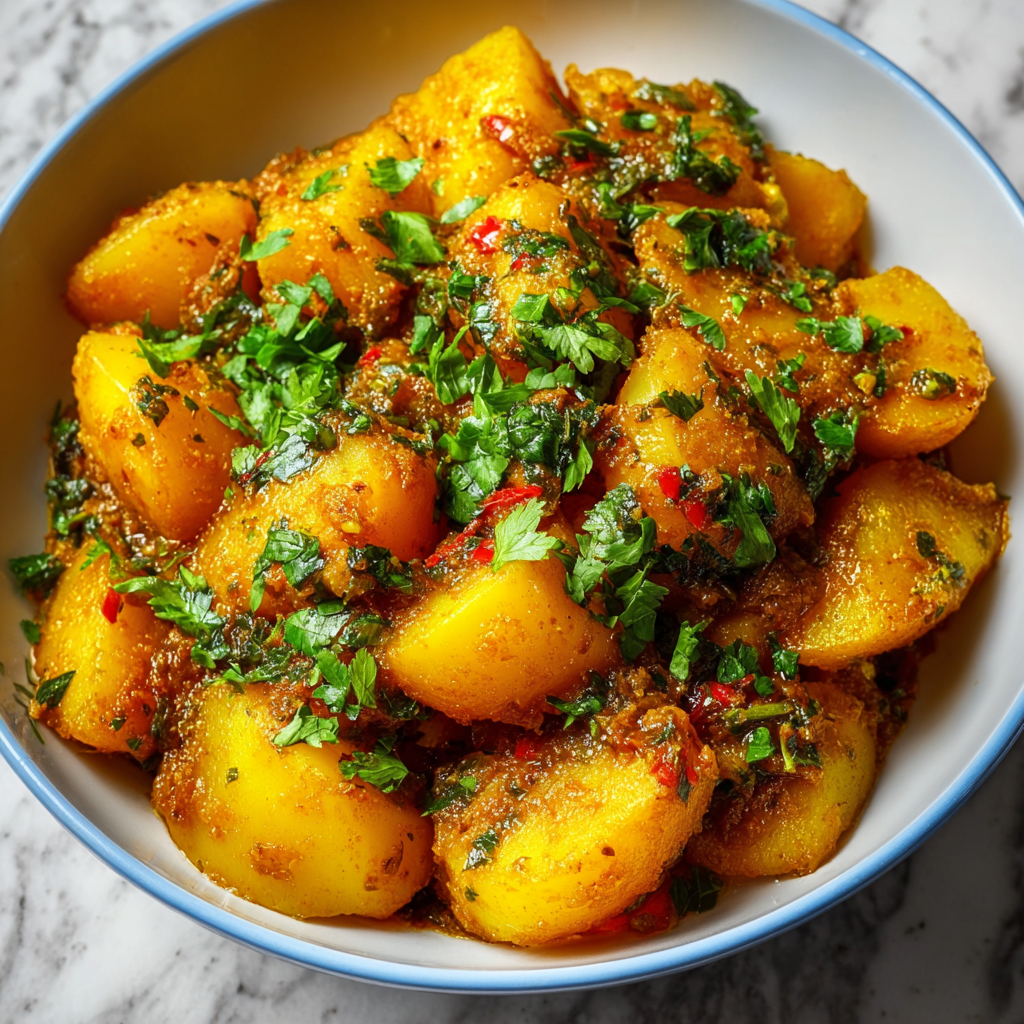
In Iranian kitchens, dopiazeh aloo is often served as a simple vegetarian main or as a side dish alongside rice, flatbread, and fresh herbs. It’s naturally vegan, budget-friendly, and made entirely from pantry staples—exactly the kind of recipe that has stood the test of generations.
What Is Dopiazeh Aloo?
Dopiazeh aloo is a classic Iranian dish made by sautéing onions until deeply golden, then simmering potatoes in a lightly spiced sauce. Unlike heavily spiced curries, Persian cuisine focuses on balance and restraint, allowing ingredients like onions, turmeric, and potatoes to shine.
The result is a dish that’s:
- Mildly spiced
- Savory and aromatic
- Comforting and hearty
- Perfect for everyday meals
It’s not a curry in the traditional Indian sense, but rather a Persian stew-style dish with a soft, saucy texture.
Why This Dish Is So Loved
Dopiazeh aloo remains popular because it’s:
- Easy to make
- Naturally plant-based
- Affordable
- Comforting without being heavy
- Adaptable to taste
It’s often one of the first Persian dishes people learn to cook, and for many, it’s deeply nostalgic—associated with family dinners and simple home-cooked meals.
Flavor Profile & Texture
This Persian potato curry is:
- Savory and gently earthy
- Lightly sweet from caramelized onions
- Warm with turmeric
- Soft, tender, and saucy
The onions break down into the sauce, while the potatoes absorb all that flavor, becoming creamy on the inside without falling apart.
Ingredients
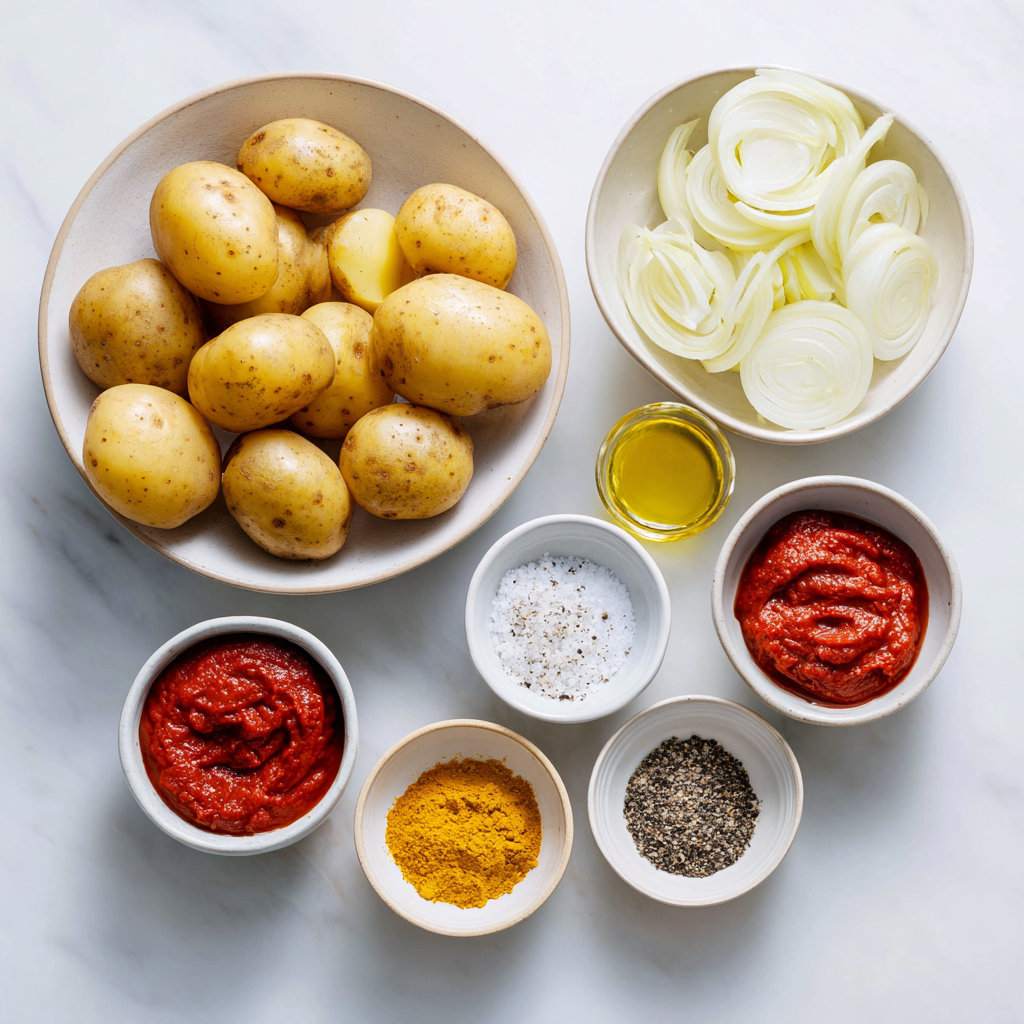
- 4 medium potatoes, peeled and cut into chunks
- 2 large onions, thinly sliced
- 3 tablespoons olive oil
- 3 cloves garlic, minced
- 1 teaspoon ground turmeric
- 1 tablespoon tomato paste
- 1 cup water or vegetable broth
- 1 teaspoon salt (adjust to taste)
- ½ teaspoon black pepper
- Fresh parsley or cilantro, for garnish
Instructions
- Heat olive oil in a large skillet or shallow pot over medium heat.
- Add sliced onions and cook slowly, stirring often, until soft and golden—about 15–20 minutes.
- Add minced garlic and turmeric; sauté for 30 seconds until fragrant.
- Stir in tomato paste and cook for 1–2 minutes to deepen flavor.
- Add potato chunks, salt, and black pepper; stir to coat in the onion mixture.
- Pour in water or broth, bring to a gentle simmer, then cover.
- Cook for 20–25 minutes, stirring occasionally, until potatoes are tender and sauce thickens.
- Taste and adjust seasoning.
- Garnish with fresh herbs and serve warm.
The Importance of Onions in Persian Cooking
In Persian cuisine, onions are more than just a base—they’re a primary flavor component. Cooking them slowly allows their natural sweetness to emerge, creating depth without the need for heavy spices.
In dopiazeh aloo, onions:
- Form the sauce
- Add sweetness and aroma
- Balance the earthiness of potatoes
- Carry the turmeric flavor
Rushing this step is the most common mistake—take your time, and the dish rewards you.
Serving Suggestions
Dopiazeh aloo is incredibly versatile. Serve it:
- With steamed basmati rice
- Alongside warm lavash or flatbread
- As part of a Persian mezze spread
- With fresh herbs and radishes
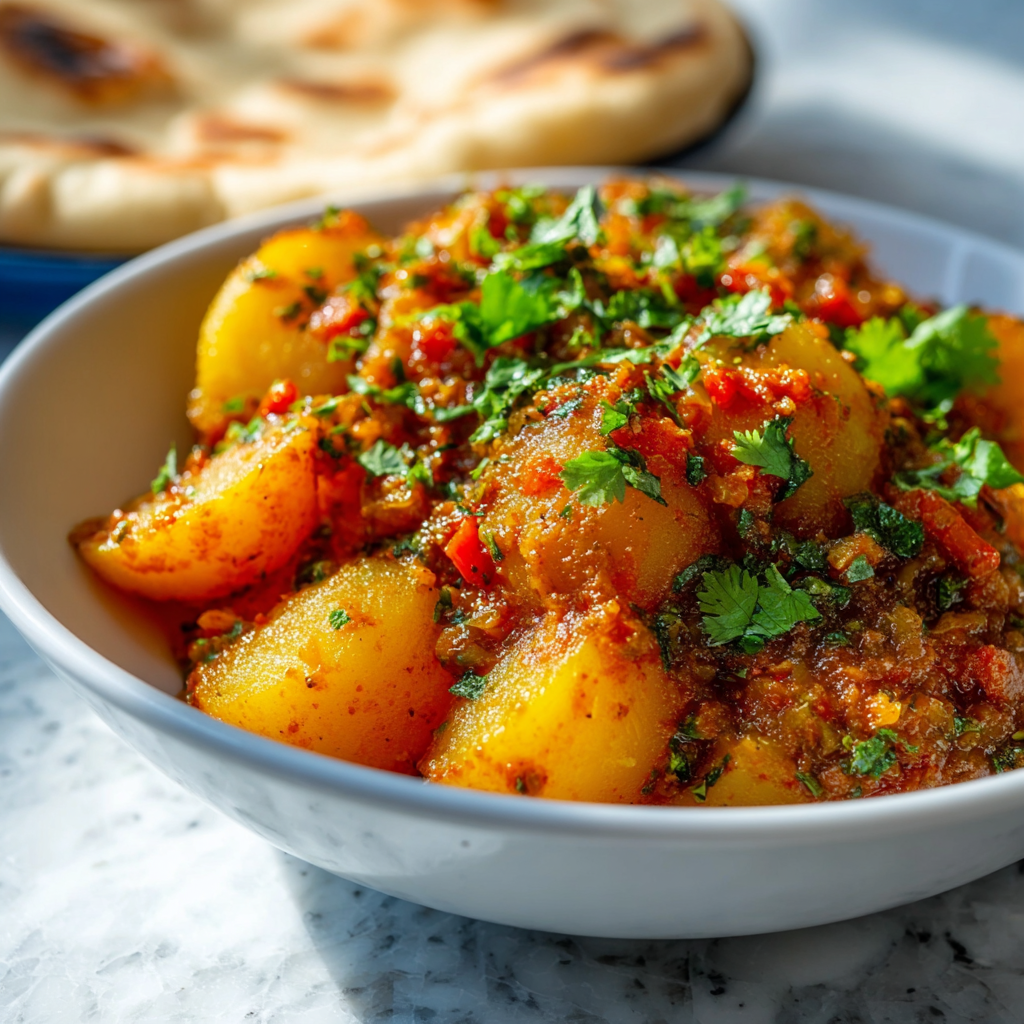
It also pairs beautifully with yogurt (if not strictly vegan) or a crisp cucumber salad.
Variations to Try
- Spicy Version: Add chili flakes or Aleppo pepper
- Tomato-Forward: Increase tomato paste or add diced tomatoes
- Herbed: Add dried fenugreek (shanbalileh)
- Protein Boost: Add chickpeas or lentils
Each variation keeps the spirit of the dish intact while allowing for personal preference.
Make-Ahead & Storage
- Keeps well refrigerated for up to 4 days
- Flavors deepen overnight
- Reheat gently on the stovetop
- Freezer-friendly for up to 2 months
It’s an excellent option for meal prep and batch cooking.
Cultural Context
Dopiazeh dishes exist across Persian cooking, often named after their starring ingredient—dopiazeh aloo (potatoes), dopiazeh shrimp, dopiazeh eggplant. The method stays similar: onions first, patience always.
This dish reflects the heart of Iranian home cooking: simple ingredients, thoughtful preparation, and comforting results.
Why This Recipe Works
This recipe balances:
- Slow-cooked onions for depth
- Turmeric for warmth and color
- Tomato paste for subtle acidity
- Gentle simmering to preserve texture
It’s a dish where restraint is the secret—nothing overwhelms, everything harmonizes.
Final Thoughts
Dopiazeh aloo is proof that humble ingredients can create extraordinary comfort. Warm, nourishing, and deeply rooted in Persian tradition, it’s the kind of recipe you return to again and again.
Whether you’re exploring Iranian cuisine for the first time or revisiting a childhood favorite, this Persian potato curry deserves a place at your table.
Dopiazeh Aloo
A traditional Persian potato curry made with onions, turmeric, and tender simmered potatoes.
Ingredients
Equipment
Method
- Sauté onions in olive oil until golden and soft.
- Add garlic and turmeric; cook briefly until fragrant.
- Stir in tomato paste and cook 1–2 minutes.
- Add potatoes, salt, and pepper; stir to coat.
- Add liquid, cover, and simmer until potatoes are tender.
Notes
Cook onions slowly for best flavor.